
PRF treatments are increasingly popular in Australian medical clinics, but what is the substance behind the interest? Is the evidence solid, or is it simply a trend? This post explains what PRF treatments are, how they work, and the key reasons patients consider them. Whether you are exploring PRF for cosmetic reasons or to address a specific concern, this information is designed to help you make an informed decision.
As an experienced provider of PRF treatments, Hair and Skin Science has worked with many patients across Australia. We will draw on that experience to give you a clear, factual overview.
What are PRF treatments?
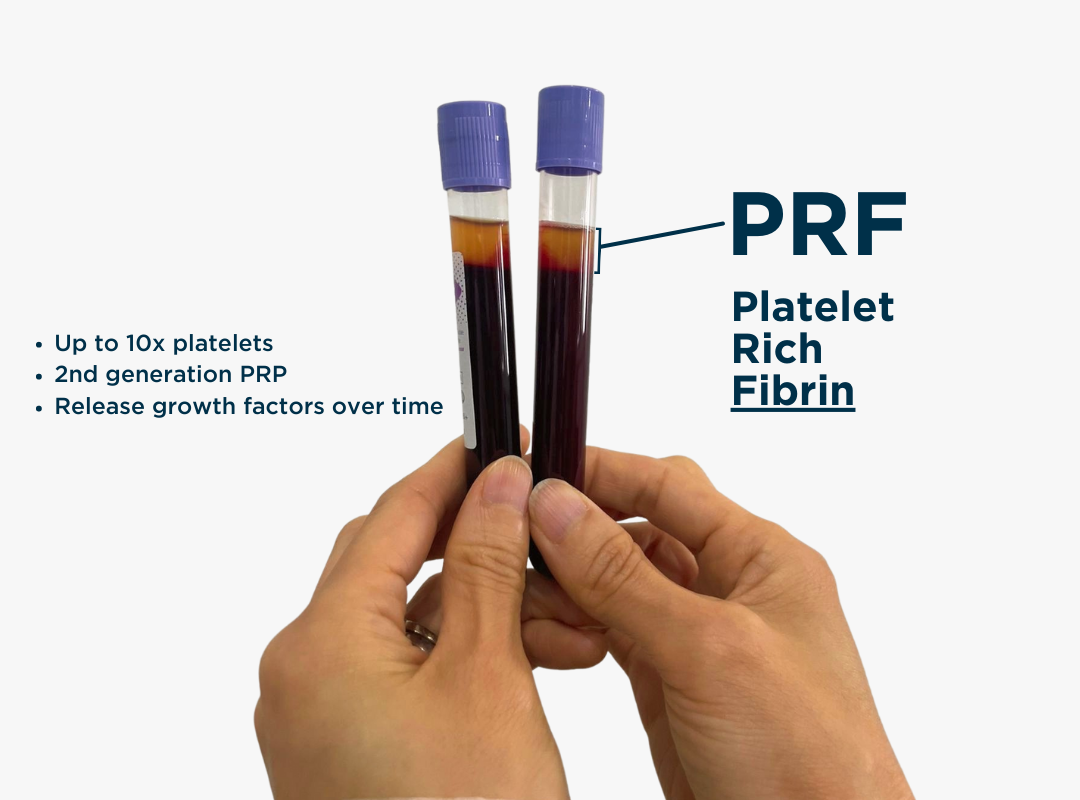
PRF treatments use Platelet Rich Fibrin (PRF) to address common skin and hair conditions. Platelet Rich Fibrin is extracted from your own blood through a straightforward process. It contains growth factors, stem cells, white blood cells, fibrin, and platelets — components your body uses to support cell regeneration, wound repair, and tissue maintenance.
PRF treatments harness these components and deliver them directly to problem areas. They are supported by a growing body of clinical evidence and are considered an evolution of the well-established PRP (Platelet Rich Plasma) approach. Individual outcomes vary, and PRF is not a guaranteed treatment for any condition.
How do PRF treatments work?
Appointments last less than an hour for most patients. The process begins with a small blood draw. The blood is passed through a medical centrifuge to separate the plasma from the other components. The resulting PRF solution is loaded into a microneedler or syringe and applied directly to the skin or scalp.
The Hair and Skin Science team is experienced in PRF administration and is focused on minimising discomfort throughout the procedure.
What types of PRF treatments are available?
PRF treatments can be applied to a range of areas and concerns, including:
- PRF hair treatment
- PRF skin treatments
- PRF eye rejuvenation
- PRF facial treatment
- PRF acne scar treatment
- PRF beard growth treatment
- PRF stretch mark treatment
- PRF hand rejuvenation
- PRF neck and décolletage treatment
Conditions PRF treatments may help address
PRF is a development of PRP, which was initially used to support wound healing and sports injury recovery. There is a growing body of scientific evidence supporting PRP, and PRF is building its own evidence base as an evolution of that approach.
Conditions PRF treatments may help address include:
- Signs of ageing, including wrinkles and fine lines
- Loose or sagging skin
- Acne scars and other scarring
- Stretch marks
- Various causes of hair loss and hair thinning
- Bags under the eyes and dark circles
- Uneven skin tone and discolouration
A consultation with a qualified practitioner is necessary to determine whether PRF is appropriate for your specific situation.
Top 5 reasons patients consider PRF treatments
1. Derived from your own blood
PRF uses your own blood as the treatment medium. Your body already uses plasma, fibrin, white blood cells, and stem cells in its natural repair processes. PRF concentrates these components and delivers them to targeted areas. Because the solution is autologous — derived from your own blood — the risk of adverse reaction is lower than with treatments using synthetic substances, though a low risk of adverse reaction remains.
2. Non-surgical approach
PRF does not require surgery. The procedure involves a blood draw and application via microneedler or syringe. There is no need for incisions or general anaesthesia, and most patients experience minimal downtime. This makes PRF a practical option for those who cannot accommodate extended recovery periods.
3. Growing evidence base
PRF is not a social media trend. It has a basis in clinical science and is an evolution of PRP, which has been studied and used in medical settings for many years. PRF’s own evidence base is growing. Individual outcomes vary and no treatment guarantees specific results, but many patients who undergo PRF treatments report positive experiences. A consultation will allow your practitioner to discuss the evidence as it applies to your specific situation.
4. Results develop over time
PRF is a slow-release treatment. The payload of growth factors is delivered during the session, but the body uses these components over the coming weeks and months to support tissue regeneration. Most patients require an initial course of 3–4 treatments before changes become noticeable. Results, where they occur, may persist for many months. Maintenance treatments are typically recommended over time.
5. Addresses a range of skin and hair concerns
PRF treatments can be applied across many areas of the body and used to address a broad range of skin and hair concerns — from fine lines and acne scarring to various forms of hair loss. This versatility means it can form part of a broader treatment plan alongside other approaches.
PRF treatments at Hair and Skin Science
PRF treatments have a growing clinical evidence base and are used by qualified practitioners to address a range of hair and skin concerns. They are derived from your own blood, require no surgery, and involve minimal downtime for most patients.
If you would like to explore whether PRF is appropriate for you, contact Hair and Skin Science today to arrange a consultation.